
By now, your puppy understands:
- Following you indoors
- That pulling stops movement
- How to re-engage
- How to handle mild distractions
Now it’s time to shape your walks into something sustainable.
Not chaotic.
Not reactive.
Not exhausting.
But calm, structured, and enjoyable.
Because leash skills aren’t just obedience.
They’re lifestyle habits.
Loose Leash Walking vs. Heel — Know the Difference
Many owners accidentally expect a formal heel on every walk.
Let’s clarify:
Heel = precise position, shoulder near your leg, sustained focus, typically used in competition or high-control situations.
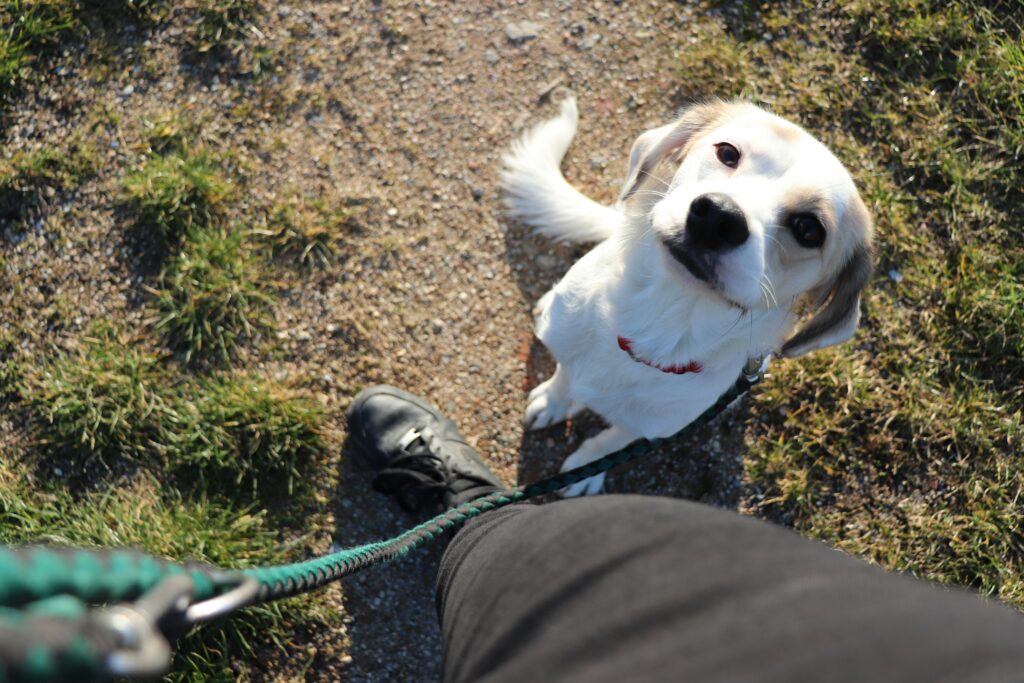
Loose leash walking = leash stays relaxed, puppy can sniff and explore within reason, but stays responsive.
Your daily goal should be loose leash walking — not strict heel.
Expecting too much precision too early can create frustration for both of you.
Create a Pre-Walk Routine
Structured walks begin before you step outside.
If your puppy:
- Jumps wildly
- Barks
- Spins in circles
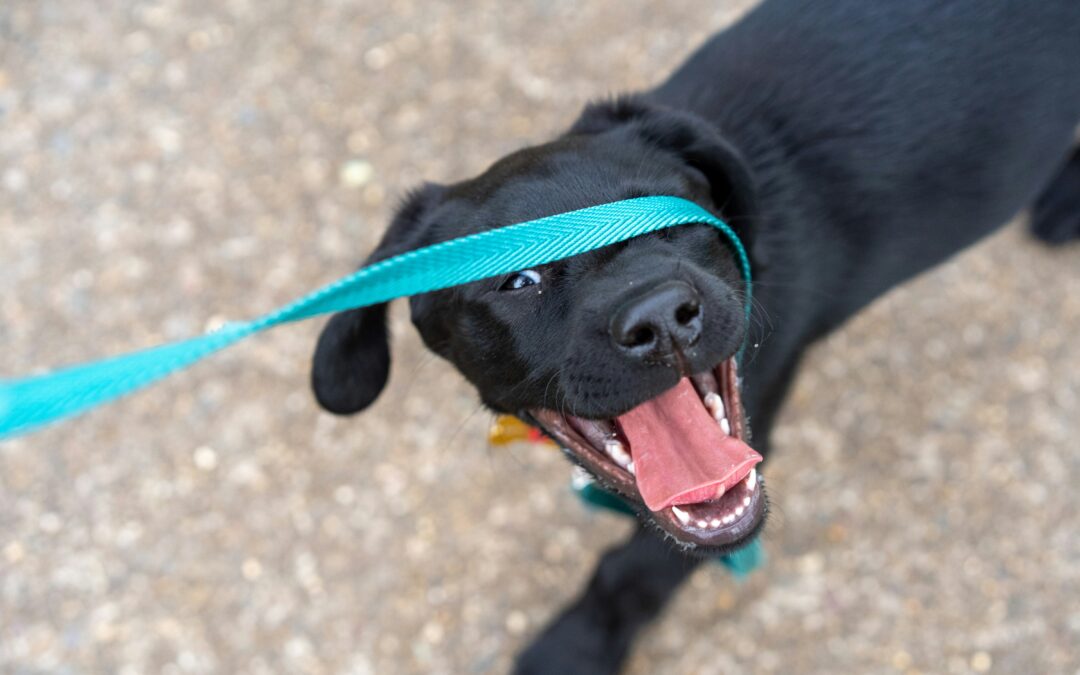
- Bites the leash
Pause.
Wait for calm.
Four paws on the floor → leash goes on.
Calm behavior starts the walk.
Excitement delays it.
This small habit builds impulse control over time.
Start Each Walk With Focus
Instead of bursting out the door, begin intentionally.
When you step outside:
Pause.
Ask for eye contact.
Reward.
Take a few slow steps.
Reward again.
This sets the tone:
We walk together.
Not separately.
The first 60 seconds shape the next 15 minutes.
Use “Training Zones” During Walks
Think of your walk in sections.
There will be moments when you ask for:
- Closer walking
- Increased focus
- Calm passing of distractions
And moments when you allow:
- Sniffing
- Exploration
- Relaxed wandering on a loose leash
Switch intentionally between these modes.
For example:
Walk calmly past a busy intersection → reward.
Then say “Go sniff” and allow exploration on a loose leash.
This balance keeps walks enriching without sacrificing manners.
Build Duration Gradually
Long, perfect walks don’t happen overnight.
Increase expectations slowly:
Week 1:
5 minutes of consistent loose leash.
Week 2:
7–8 minutes.
Week 3:
10 minutes with brief distractions.
Duration grows through repetition — not pushing too fast.
If pulling increases, shorten the walk temporarily and rebuild success.
Add Light Structure for Mental Engagement
Structured walks don’t mean rigid walking.
They mean purposeful walking.
Try:
- Random direction changes
- Short focus intervals
- Quick sit before crossing streets
- Check-ins before greeting people
These mini-exercises keep your puppy mentally present.
A mentally engaged puppy pulls less.
Protect the Experience
If your puppy is overwhelmed by:
- Busy sidewalks
- Dog-heavy parks
- Loud traffic
- Large groups of children
Scale back.
There’s no prize for walking in the most chaotic environment.
Skill grows faster in manageable settings.
Choose locations that support success.
Incorporate Calm Breaks
If your puppy becomes overstimulated:
Stop.
Stand still.
Wait for calm breathing.
Reward relaxation.
Teaching your puppy how to settle outdoors is just as important as teaching movement.
Calmness is a skill.
Practice it.
Make Walks Collaborative
Shift your mindset from:
“I’m controlling this walk.”
To:
“We’re experiencing this together.”
Notice what your puppy enjoys.
Allow safe sniffing.
Celebrate improvements.
Reinforce connection often.
Leash training is relationship training.
Expect Adolescence
As your puppy grows (around 5–8 months), you may notice regression.
Sudden pulling.
Testing boundaries.
Selective hearing.
This is normal developmental change.
Return to basics.
Increase reinforcement.
Shorten sessions if needed.
Consistency through adolescence creates reliable adult behavior.
What a Successful Walk Looks Like
A well-trained loose leash walk includes:
- A relaxed leash most of the time
- Occasional sniff breaks
- Manageable responses to distractions
- Quick recovery from mistakes
- A calm start and finish
- A connected feeling between you
Perfection isn’t required.
Cooperation is.
The Lifetime Benefit
When you invest in structured leash training early, you gain:
- Stress-free daily walks
- Safer public outings
- Easier vet visits
- Better social interactions
- Stronger trust
- Greater freedom for your dog
Walking becomes bonding time instead of tension time.
And that changes everything.
The Big Picture
Loose leash walking isn’t about domination or correction.
It’s about:
- Teaching impulse control
- Reinforcing engagement
- Creating predictable boundaries
- Balancing structure with enrichment
- Building trust
You are teaching your puppy how to exist calmly in a stimulating world.
That skill extends far beyond the leash.
The Bottom Line
To turn walks into calm, structured adventures:
- Start with calm before leaving the house.
- Reward early and often.
- Use training zones intentionally.
- Gradually build duration.
- Protect the learning environment.
- Stay consistent through developmental changes.
Leash training is not a one-week project.
It’s a daily habit.
But done correctly, it becomes one of the most rewarding parts of life with your dog.